
Family
How to See Homeschool Progress Before the Year Disappears
May 23, 2026
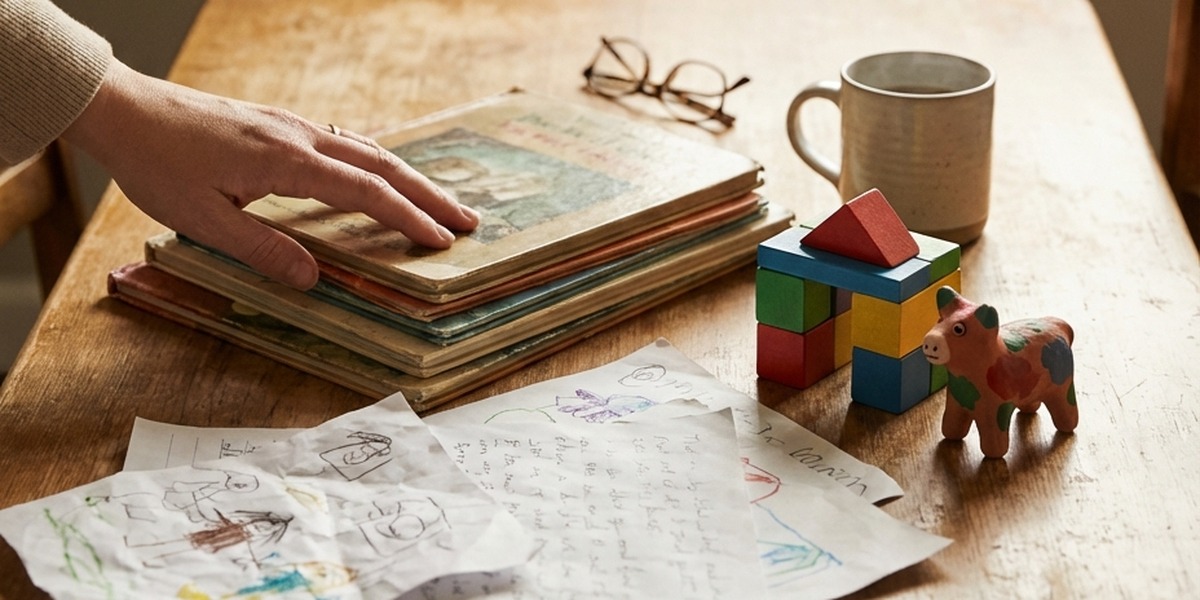
If you've been wondering whether enough is happening, you might be looking for the wrong kind of proof. A lot of real homeschool progress is quieter than we expect.
If you homeschool, you have probably asked some version of the same question more than once:
Are we doing enough?
It shows up in hard weeks.
It also shows up in perfectly ordinary weeks that just do not feel very impressive while we are living them. A Tuesday where the math was fine, the read-aloud was fine, the writing took longer than we wanted, and nothing about the day felt like proof of anything.
That is part of what makes homeschool progress so easy to miss. A lot of it does not look dramatic in the moment. It looks like one more finished book. One better sentence. A project picked back up instead of abandoned. A child remembering something they used to need help with.
In other words, it looks ordinary.
And because it looks ordinary, it is easy to underestimate.
One of the hardest parts of homeschooling is that we are too close to it.
We are in the middle of the books, the questions, the mess, the snacks, and all the little interruptions that make family learning real. When you are that close to the work, it is hard to see the pattern.
In our family, this is often where the doubt sneaks in. Not because nothing is happening, but because the progress is quieter than we expect.
It does not always look like a giant leap.
More often it looks like a read-aloud conversation getting a little deeper. A child writing a sentence with less resistance. A project they come back to for the third time instead of leaving on the table.
Those are the kinds of things that actually shape a year.
If you are trying to get a more honest read on how things are going, it helps to stop looking only for dramatic proof.
Look at the books your child has finished.
Look at the stories they want to tell back.
Look at the writing they can do now that felt harder a month or two ago.
Look at the projects they keep returning to.
Look at what feels a little easier, stronger, or more consistent than it did not long ago.
That last question is often the most useful one.
Not, `Did we do enough?`
But, `What is easier, stronger, or more consistent than it was a month ago?`
That question is usually more honest.
It helps us notice the kind of progress that does not always leave behind a polished result. A child staying with something longer. A child needing less prompting. A child trying again without melting down as quickly as they used to.
That is progress too, even when there is nothing you would think to put in a folder.
One of the simplest ways we have found to notice progress is to look for one read, one write, and one build.
Not because every day has to include all three.
And not because anyone needs another system to manage.
But because those three categories give us a practical way to see what is already happening.
One read might be a finished chapter, a read-aloud conversation, or a book your child keeps reaching for on their own.
One write might be a labeled drawing, a sentence, a narration, a list, or a story opening.
One build might be a project step, a science setup, a craft, a design sketch, or a physical skill they are practicing until it feels more natural.
When we start noticing those moments, the week often looks fuller than it felt.
Not busier. Fuller.
That is an important difference.
The goal is not to prove that we are squeezing every minute for output. The goal is to notice that meaningful work is already taking shape in ways that are easy to lose when everything stays in our heads.
This is where many of us make the whole thing harder than it needs to be.
We think the answer is a bigger binder, a cleaner spreadsheet, or a more complete system. We tell ourselves that this time we are finally going to keep up with every list, every sample, every photo, and every note.
Usually that does not make us feel calmer. It just gives us one more thing to fall behind on.
A lighter approach works better.
You do not need to document everything.
You do need a way to keep a few real signals from disappearing.
A finished book.
A strong sentence.
A project photo.
A short note about what clicked.
That is often enough to help the year feel more visible.
When we save a few of those moments, we are no longer relying only on memory.
And memory is not always fair in the middle of a hard week.
We can look back and see what actually happened.
That is why we built ReadWriteBuild. Families can log read, write, and build sessions in under a minute, add a short note, and keep the books, stories, projects, and photos they will want to look back on later.
Not to turn home education into another heavy system.
Just to make the real work more visible over time.
If you have been wondering whether enough is happening, try this before the week disappears.
Notice one read.
Notice one write.
Notice one build.
Then ask yourself what feels a little easier, deeper, or steadier than it did not long ago.
You may find that more is taking shape than you thought.
Are we doing enough?
It shows up in hard weeks.
It also shows up in perfectly ordinary weeks that just do not feel very impressive while we are living them. A Tuesday where the math was fine, the read-aloud was fine, the writing took longer than we wanted, and nothing about the day felt like proof of anything.
That is part of what makes homeschool progress so easy to miss. A lot of it does not look dramatic in the moment. It looks like one more finished book. One better sentence. A project picked back up instead of abandoned. A child remembering something they used to need help with.
In other words, it looks ordinary.
And because it looks ordinary, it is easy to underestimate.
We miss progress because homeschooling is so close-up
One of the hardest parts of homeschooling is that we are too close to it.
We are in the middle of the books, the questions, the mess, the snacks, and all the little interruptions that make family learning real. When you are that close to the work, it is hard to see the pattern.
In our family, this is often where the doubt sneaks in. Not because nothing is happening, but because the progress is quieter than we expect.
It does not always look like a giant leap.
More often it looks like a read-aloud conversation getting a little deeper. A child writing a sentence with less resistance. A project they come back to for the third time instead of leaving on the table.
Those are the kinds of things that actually shape a year.
The best signs are usually the ordinary ones
If you are trying to get a more honest read on how things are going, it helps to stop looking only for dramatic proof.
Look at the books your child has finished.
Look at the stories they want to tell back.
Look at the writing they can do now that felt harder a month or two ago.
Look at the projects they keep returning to.
Look at what feels a little easier, stronger, or more consistent than it did not long ago.
That last question is often the most useful one.
Not, `Did we do enough?`
But, `What is easier, stronger, or more consistent than it was a month ago?`
That question is usually more honest.
It helps us notice the kind of progress that does not always leave behind a polished result. A child staying with something longer. A child needing less prompting. A child trying again without melting down as quickly as they used to.
That is progress too, even when there is nothing you would think to put in a folder.
One read, one write, one build can tell you a lot
One of the simplest ways we have found to notice progress is to look for one read, one write, and one build.
Not because every day has to include all three.
And not because anyone needs another system to manage.
But because those three categories give us a practical way to see what is already happening.
One read might be a finished chapter, a read-aloud conversation, or a book your child keeps reaching for on their own.
One write might be a labeled drawing, a sentence, a narration, a list, or a story opening.
One build might be a project step, a science setup, a craft, a design sketch, or a physical skill they are practicing until it feels more natural.
When we start noticing those moments, the week often looks fuller than it felt.
Not busier. Fuller.
That is an important difference.
The goal is not to prove that we are squeezing every minute for output. The goal is to notice that meaningful work is already taking shape in ways that are easy to lose when everything stays in our heads.
You do not need to save everything
This is where many of us make the whole thing harder than it needs to be.
We think the answer is a bigger binder, a cleaner spreadsheet, or a more complete system. We tell ourselves that this time we are finally going to keep up with every list, every sample, every photo, and every note.
Usually that does not make us feel calmer. It just gives us one more thing to fall behind on.
A lighter approach works better.
You do not need to document everything.
You do need a way to keep a few real signals from disappearing.
A finished book.
A strong sentence.
A project photo.
A short note about what clicked.
That is often enough to help the year feel more visible.
Why saving a few moments matters
When we save a few of those moments, we are no longer relying only on memory.
And memory is not always fair in the middle of a hard week.
We can look back and see what actually happened.
That is why we built ReadWriteBuild. Families can log read, write, and build sessions in under a minute, add a short note, and keep the books, stories, projects, and photos they will want to look back on later.
Not to turn home education into another heavy system.
Just to make the real work more visible over time.
Before this week disappears, notice three things
If you have been wondering whether enough is happening, try this before the week disappears.
Notice one read.
Notice one write.
Notice one build.
Then ask yourself what feels a little easier, deeper, or steadier than it did not long ago.
You may find that more is taking shape than you thought.