
Writing
How Writing Helps Kids Think, Remember, and Learn
June 02, 2026
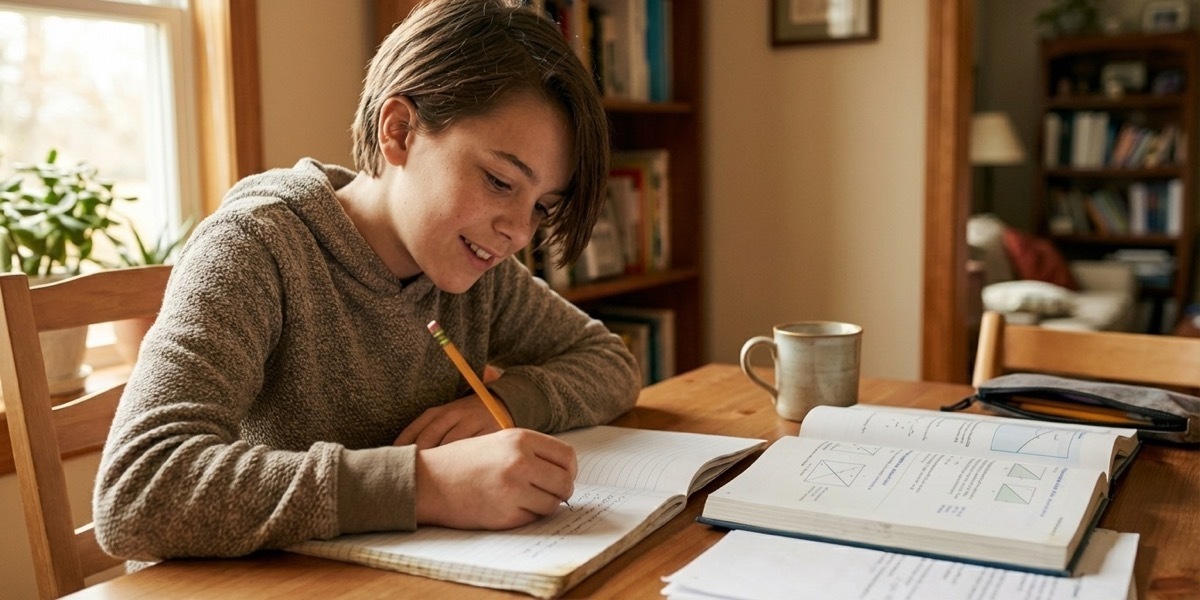
Habits like narration, notebooking, copywork, commonplace entries, and written summaries can do so much good for growing minds. They are not only language arts tasks. They help children digest what they are reading, hearing, and noticing.
Most of us grew up thinking of writing as the last step.
You read the chapter, listen to the lesson, finish the experiment, and then write something to prove you understood it.
We used to think about it that way too.
But we have seen again and again that writing is often not just proof of learning. It is one of the ways the learning actually happens.
When one of our kids has to put an idea into words, the pace changes. They pause. They rethink. They cross something out. They realize what they actually remember and what still feels fuzzy.
The writing becomes part of the thinking.
That is part of what Janet Emig meant in Writing as a Mode of Learning. Even the title says something parents can see for themselves: when children have to write in their own words, the understanding usually gets sharper.
What was the main idea?
What happened first?
What detail matters most?
A child can sometimes recognize the right answer on a worksheet without ever really organizing the idea for themselves. Writing is different. It asks them to select, sequence, summarize, and explain.
We have seen this in ordinary homeschool moments. A child finishes a read-aloud and gives a vague answer out loud, but when we ask for one written sentence, the real understanding starts to show. A science activity feels exciting in the moment, but the learning gets clearer when a child writes down what happened and why. A history lesson feels memorable, but a short narration shows us what actually stuck.
That is why habits like narration, notebooking, copywork, commonplace entries, and written summaries can do so much good. They are not only language arts tasks. They help children digest what they are reading, hearing, and noticing.
In the early years, writing may look like drawing, dictation, tracing, labeling a picture, or slowly learning how to hold a pencil well enough to make intentional marks. Even that stage matters, because children are learning that thoughts can be captured and shared. Reading Rockets notes that rich early writing experiences lay a foundation for literacy learning.
In elementary school, writing often looks like copywork, short narrations, lists, letters, nature journals, notebook pages, and simple stories. Reading Rockets describes first graders as writing frequently to express their ideas and interests. They are also learning the building blocks that make later writing possible: spacing, punctuation, sentence structure, story sequence, and the habit of putting ideas into words.
By middle school and high school, the tasks get more demanding, but the principle stays the same. Students still learn by writing. Notes help them sort important details from unimportant ones. Literature responses help them decide what they think. Lab reflections help them clarify what happened. Outlines and research writing help them gather, sift, condense, and connect.
Pencil grip comes before fluent handwriting. Oral storytelling comes before written storytelling. Clear sentences come before strong paragraphs. Notes come before polished essays.
In one well-known study, The Pen Is Mightier Than the Keyboard, Pam A. Mueller and Daniel M. Oppenheimer wrote that “students who took notes on laptops performed worse on conceptual questions than students who took notes longhand.” They also found that laptop note takers were more likely to “transcribe lectures verbatim rather than processing information and reframing it in their own words,” which they describe as “detrimental to learning.”
That does not mean typing is always bad, or that every assignment must be done by hand. But it does support something many parents and teachers have noticed for years: physically writing notes, summaries, and narrations often helps ideas settle more deeply.
We have seen this at home too. When a child writes a summary by hand, they usually cannot copy mindlessly. They have to decide what matters and how to say it. That extra effort often leads to better attention and better memory.
A handwritten science summary, a set of history notes, a written narration after a chapter, or a rough outline for an essay can all do real intellectual work.
A child may sound confident out loud but struggle to organize thoughts on paper. Another may say very little out loud, then surprise you with a careful notebook entry or a thoughtful paragraph. Writing gives parents a clearer window into both understanding and growth.
When we keep our children’s labeled drawings, copywork pages, narrations, notebook entries, stories, summaries, and essays, we are not just saving assignments. We are saving a record of development. We can see when handwriting became easier, when sentences became stronger, and when a child moved from retelling facts to making connections.
That is one reason ReadWriteBuild prioritizes writing so intentionally. Writing is one of the three core daily habits. Families can log writing sessions, add a short note, and save photos of the work they want to revisit later. That first dictated sentence, the first written narration, the rough outline, and the finished essay are all worth keeping.
So this week, try one small writing moment after your child learns something.
Ask for one sentence after a read-aloud.
Ask for a few notes after a documentary.
Ask for a labeled drawing after a nature walk.
Ask for a short narration after history.
You may learn more from that one page than from a whole stack of finished worksheets.
And if you want a simple way to keep that kind of progress visible, save it for later, and make writing a more meaningful part of your family rhythm, ReadWriteBuild can help you do exactly that, give it a try here: ReadWriteBuild.com/membership.
You read the chapter, listen to the lesson, finish the experiment, and then write something to prove you understood it.
We used to think about it that way too.
But we have seen again and again that writing is often not just proof of learning. It is one of the ways the learning actually happens.
When one of our kids has to put an idea into words, the pace changes. They pause. They rethink. They cross something out. They realize what they actually remember and what still feels fuzzy.
The writing becomes part of the thinking.
That is part of what Janet Emig meant in Writing as a Mode of Learning. Even the title says something parents can see for themselves: when children have to write in their own words, the understanding usually gets sharper.
Writing helps children process, not just repeat
One reason writing matters so much is that it forces decisions.What was the main idea?
What happened first?
What detail matters most?
A child can sometimes recognize the right answer on a worksheet without ever really organizing the idea for themselves. Writing is different. It asks them to select, sequence, summarize, and explain.
We have seen this in ordinary homeschool moments. A child finishes a read-aloud and gives a vague answer out loud, but when we ask for one written sentence, the real understanding starts to show. A science activity feels exciting in the moment, but the learning gets clearer when a child writes down what happened and why. A history lesson feels memorable, but a short narration shows us what actually stuck.
That is why habits like narration, notebooking, copywork, commonplace entries, and written summaries can do so much good. They are not only language arts tasks. They help children digest what they are reading, hearing, and noticing.
This looks different at every age
One of the easiest mistakes to make is thinking that “real writing” starts when a child can produce a polished paragraph. But writing develops in stages, and every stage supports learning.In the early years, writing may look like drawing, dictation, tracing, labeling a picture, or slowly learning how to hold a pencil well enough to make intentional marks. Even that stage matters, because children are learning that thoughts can be captured and shared. Reading Rockets notes that rich early writing experiences lay a foundation for literacy learning.
In elementary school, writing often looks like copywork, short narrations, lists, letters, nature journals, notebook pages, and simple stories. Reading Rockets describes first graders as writing frequently to express their ideas and interests. They are also learning the building blocks that make later writing possible: spacing, punctuation, sentence structure, story sequence, and the habit of putting ideas into words.
By middle school and high school, the tasks get more demanding, but the principle stays the same. Students still learn by writing. Notes help them sort important details from unimportant ones. Literature responses help them decide what they think. Lab reflections help them clarify what happened. Outlines and research writing help them gather, sift, condense, and connect.
Pencil grip comes before fluent handwriting. Oral storytelling comes before written storytelling. Clear sentences come before strong paragraphs. Notes come before polished essays.
Writing by hand can help information stick
This becomes more visible as children get older and begin taking more notes.In one well-known study, The Pen Is Mightier Than the Keyboard, Pam A. Mueller and Daniel M. Oppenheimer wrote that “students who took notes on laptops performed worse on conceptual questions than students who took notes longhand.” They also found that laptop note takers were more likely to “transcribe lectures verbatim rather than processing information and reframing it in their own words,” which they describe as “detrimental to learning.”
That does not mean typing is always bad, or that every assignment must be done by hand. But it does support something many parents and teachers have noticed for years: physically writing notes, summaries, and narrations often helps ideas settle more deeply.
We have seen this at home too. When a child writes a summary by hand, they usually cannot copy mindlessly. They have to decide what matters and how to say it. That extra effort often leads to better attention and better memory.
A handwritten science summary, a set of history notes, a written narration after a chapter, or a rough outline for an essay can all do real intellectual work.
Writing lets us see growth we might otherwise miss
Another gift of writing is that it makes progress visible.A child may sound confident out loud but struggle to organize thoughts on paper. Another may say very little out loud, then surprise you with a careful notebook entry or a thoughtful paragraph. Writing gives parents a clearer window into both understanding and growth.
When we keep our children’s labeled drawings, copywork pages, narrations, notebook entries, stories, summaries, and essays, we are not just saving assignments. We are saving a record of development. We can see when handwriting became easier, when sentences became stronger, and when a child moved from retelling facts to making connections.
That is one reason ReadWriteBuild prioritizes writing so intentionally. Writing is one of the three core daily habits. Families can log writing sessions, add a short note, and save photos of the work they want to revisit later. That first dictated sentence, the first written narration, the rough outline, and the finished essay are all worth keeping.
So this week, try one small writing moment after your child learns something.
Ask for one sentence after a read-aloud.
Ask for a few notes after a documentary.
Ask for a labeled drawing after a nature walk.
Ask for a short narration after history.
You may learn more from that one page than from a whole stack of finished worksheets.
And if you want a simple way to keep that kind of progress visible, save it for later, and make writing a more meaningful part of your family rhythm, ReadWriteBuild can help you do exactly that, give it a try here: ReadWriteBuild.com/membership.
Sources
Janet Emig, Writing as a Mode of Learninghttps://doi.org/10.2307/356095
Pam A. Mueller and Daniel M. Oppenheimer, The Pen Is Mightier Than the Keyboard
https://doi.org/10.1177/0956797614524581
Reading Rockets, How Do I Write…? Scaffolding Preschoolers’ Early Writing Skills
https://www.readingrockets.org/topics/preschool-and-child-care/articles/how-do-i-write-scaffolding-preschoolers-early-writing
Reading Rockets, Looking at Writing: First Grade
https://www.readingrockets.org/classroom/looking-writing/first-grade