
Success Stories
Read, Write, Build: A Simple Framework for Deeper Homeschool Learning
September 18, 2026
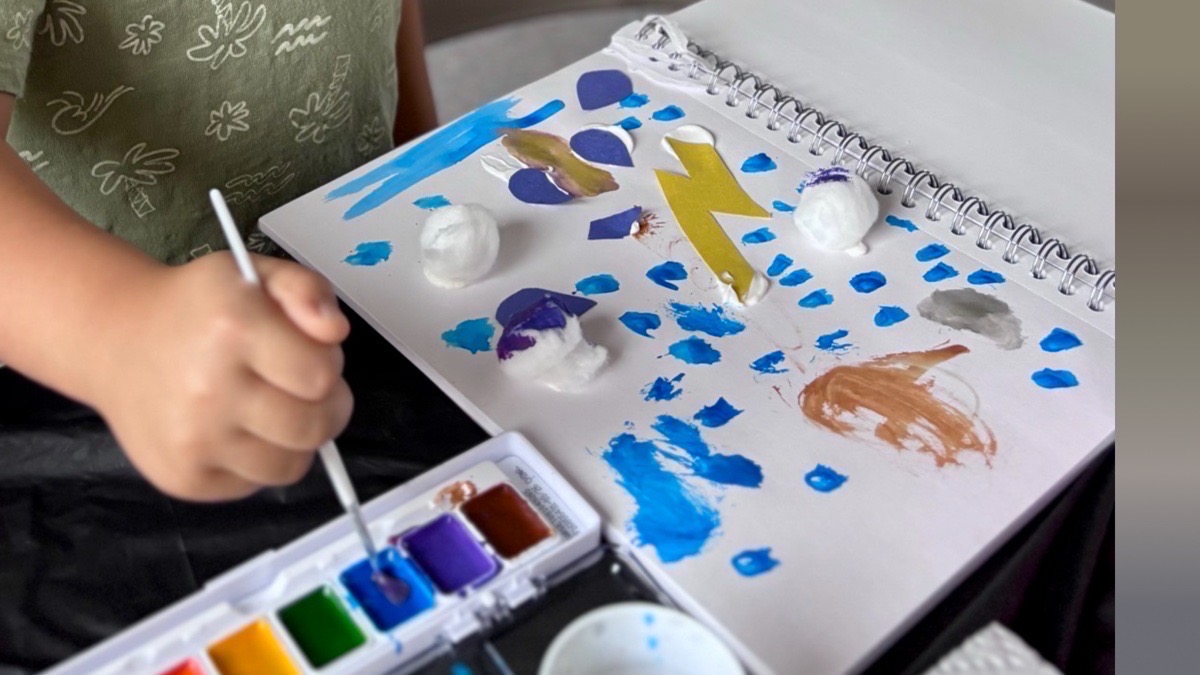
At our hurricane nature-study co-op, one topic connected science, language arts, and art. The simple framework behind it—read, write, and build—can bring the same focus to your homeschool planning.
Have you ever started planning one homeschool topic and somehow ended up with too many worksheets, a long supply list, and activities that do not seem to connect?
It is easy to do. We want our children to read, practice language arts, explore science, make art, and complete something hands-on. Before long, we are planning each subject separately and trying to fit everything into the same day.
For the first nature-study meeting of our homeschool co-op season, we tried something different. Our topic was hurricanes, and children ranging from our youngest Sprouts through our high-school Oaks rotated through Science, Language Arts, and Art stations.
They read about hurricanes. They wrote about hurricanes. And they built experiments and art inspired by hurricanes.
Those three actions gave the whole day its structure.
Read: Give Children Something Meaningful to Think About
Reading is where children meet an idea. It gives them knowledge, vocabulary, stories, context, and questions before we ask them to create something of their own.
At our hurricane co-op, reading did not only mean sitting down with a book. The children watched age-appropriate hurricane videos, studied a “How Do Hurricanes Form?” visual, examined satellite and cloud images, sequenced formation cards, and interpreted maps, storm categories, and a forecast cone.
That is all reading.
Children read words, but they also learn to read photographs, diagrams, maps, data, and the natural world around them. A young child can look closely at the shape of a cumulonimbus cloud. An older child can compare hurricane tracks or ask what a forecast cone does—and does not—tell us.
The format can change with age, but the purpose remains the same: give children something meaningful to notice and think about.
Write: Help Children Make Their Thinking Visible
Writing is not only a report or a paragraph. It can be a label, a list, a caption, an observation, a poem, a drawing with dictation, or an idea rehearsed aloud before it reaches the page.
Our three co-op groups approached hurricane language in different ways.
The Sprouts explored a storm poem, played with onomatopoeia such as “whoosh,” “rumble,” and “crash,” and formed letters or words with Play-Doh. The Saplings used hurricane Mad Libs to experiment with vocabulary and sentence structure. The Oaks prepared a hurricane-preparedness talk, organizing information so they could explain it clearly to others.
No group needed to produce the same kind of work. The younger children could hear, say, shape, draw, or dictate words. The middle group could play with language within a helpful structure. The oldest students could sort information, decide what mattered most, and communicate it for a real purpose.
In each case, language helped make their learning visible.
Build: Make Learning Tangible
“Build” can sound as though every lesson needs lumber, tools, or a complicated construction project. It does not.
To build is to take an idea and make something with it. Children might build a physical model, an experiment, a piece of art, a map, a timeline, a performance, a recipe, a game, or a digital creation.
During our Science rotations, younger students observed a hurricane-in-a-bowl model. The Saplings created bottle vortices and compared what happened with a slower or faster swirl. In Art, the children represented clouds, movement, light, and the feeling of a storm with age-appropriate materials.
The models were simple, but simple did not mean meaningless. A bowl or bottle cannot recreate an actual hurricane. It does not show the warm ocean, rising moist air, pressure differences, wind shear, or the enormous scale of a real storm. It can, however, make rotation visible and give children something concrete to observe.
That led to an important question: What does this model show, and what does it leave out?
Building is valuable not because a project perfectly reproduces the real thing, but because children must observe, test, choose, revise, and create.
Why Read, Write, Build Worked So Well
The co-op schedule helped keep us on track, but the framework kept the learning connected.
Instead of completing unrelated activities at three stations, the children met the same idea again and again in different forms. They gathered information, used language, observed movement, created art, and connected hurricane facts with practical preparedness and care for their neighbors.
The framework also adapted naturally across ages. A preschooler could draw, dictate, and manipulate materials while a high-school student could interpret data and prepare an explanation. Everyone explored the same subject without being asked to complete the same task.
It also created natural records of learning. Poems, Mad Libs, artwork, observation notes, photographs of experiments, and parent observations all captured what happened. We did not need a separate test to prove that learning took place.
Most importantly, Read, Write, Build gave us structure without making the day rigid. The three verbs helped us choose activities that belonged together—and made it easier to leave out ideas that would only add busyness.
How to Plan Your Own Read, Write, Build Study
You do not need a co-op, three stations, or a full morning to use this approach. Start with one topic or question and ask:
- What will we read?
Choose one strong source that introduces or deepens the idea. It might be a picture book, chapter, article, map, diagram, video, or primary source. - What will we write?
Choose one way for your child to process or communicate the idea. They might label, list, narrate, compare, explain, persuade, draw and dictate, or write creatively. - What will we build?
Choose one way to make the learning tangible. Try a model, experiment, art project, map, performance, game, recipe, or useful object. - How will we reflect?
Ask a simple closing question: What did you notice? What did your model show? What surprised you? What question do you still have?
A planning page can be as simple as this:
Topic or question:READ: What will introduce or deepen the idea?WRITE: How will my child process or communicate it?BUILD: What can my child test, make, model, or create?REFLECT: What will we discuss, photograph, save, or log?
The three parts do not need equal time, and they do not have to happen on the same day. A family might read on Monday, write on Tuesday, and build later in the week. The point is not to force every lesson into a formula. The point is to give one idea several connected ways to take root.
It Works With Almost Any Subject
For a nature study, read about pollinators, write field observations, and build a model flower or simple pollinator shelter.
For history, read a biography or primary source, write a diary entry from that time, and build a timeline or model.
For literature, read a chapter, write from a character’s point of view, and build the setting or dramatize a scene.
For math, read a real-world problem, write an explanation of the strategy, and build or test a model with manipulatives.
Even a family project can follow the same rhythm: read the instructions and background information, write a plan and supply list, and build the finished project together.
Our hurricane meeting succeeded not because we squeezed in every activity we could find. It worked because the children had several connected ways to encounter and use one meaningful idea. Reading supplied knowledge. Writing helped them form and communicate their thoughts. Building made the learning tangible.
The next time homeschool planning begins to feel scattered, start with three questions:
What will we read? What will we write? What will we build?
Those simple questions can turn one subject into a connected learning experience—and help our children grow not only as students, but as readers, writers, and builders.