
Success Stories
Momentum: Why Read, Write, Build Begets More Read, Write, Build
November 29, 2025
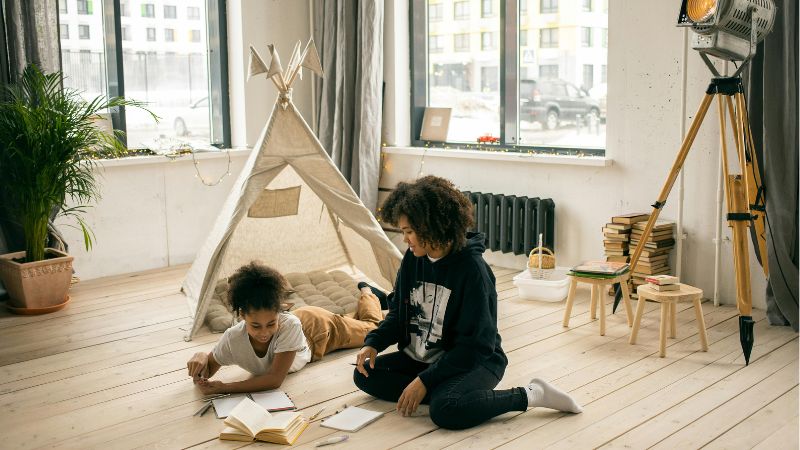
Have you ever heard the old saying, “Sleep begets sleep?” Perhaps a well-meaning relative told you not to worry about an early bedtime because your little ones would simply "sleep when they're tired out." If yo...
Have you ever heard the old saying, “Sleep begets sleep?”
Perhaps a well-meaning relative told you not to worry about an early bedtime because your little ones would simply "sleep when they're tired out." If you're like most parents, you learned the hard way that the opposite is often true: overtired children lead to cranky tantrums, confusing second winds, and ultimately, less quality sleep.
The truth is, momentum is everything.
We’ve found that this powerful relationship holds true for many other areas of life—including reading, writing, and building. Just like sleep, productive action begets more productive action.
The more your children read, write, and build, the more easily and naturally they will continue to do each activity. Of course, the reverse is also true—the more time they spend in passive screen consumption, the more they will gravitate toward it.
The key is in the initial gentle push. Once they gain that first spark of momentum, it's easier to keep them going.
Here are a few examples of how this has played out in our home, along with simple ways we’ve discovered to encourage more Read, Write, and Build time without directly requiring it.
Gently Encouraging Reading
We don't need a huge, formal intervention to encourage reading; we just need to plant the seeds for curiosity.
- When I make sure to include reading as part of our morning time or during breakfast, my kids are far more likely to pick up another book immediately after.
- I’ll sometimes spread out (or even lay open) books over the breakfast table the night before. When they find these upon waking, they usually pore over the illustrations and text on and off throughout the day.
- If I decide to play an audiobook during a car trip to the store or to an extracurricular activity, it’s highly likely they’ll request to listen to the next chapter or part the very next time we’re in the car together.
Gently Encouraging Writing
Writing and creating is often a "monkey see, monkey do" endeavor. Our children are inspired by what they see us doing.
- If I take out my personal commonplace book and record a favorite passage from a book I’m enjoying, they’ll often want to do the same.
- On a number of occasions, I’ve pulled out some notebooks and let them know that I want to spend some time journaling. Guess what? They usually want to try to do the same.
- After watching or listening to an interview with an author, they'll often be immediately inspired to write a book of their own (even if it’s just a few pages or a comic strip!).
Gently Encouraging Building
Building relies on curiosity and the appeal of an unfinished project. Make the opportunity hard to ignore!
- Just like with books, I’ll sometimes leave a new or forgotten LEGO set or puzzle on the kitchen table before I go to bed for them to discover when they awake.
- Whether I buy a wooden project for the house or print out a new recipe to try, I’ve noticed that if I talk about how excited I am to try to create something new, it will often inspire them to want to create something as well.
- Even when I’m working on the computer (perhaps even on this very website!), they may want to help or start their own digital project like a Scratch game on another device.
Planting Seeds for Success
The core idea is simple: gentle nudging, combined with practicing what you preach, creates the initial push they need. Once they gain that positive momentum, it becomes exponentially easier to keep them going.
To make this successful in your home:
- Lead by Example: Let your children see you reading, writing, and building.
- Ensure Availability: Make sure you have plenty of materials available for them to use their imaginations for creation (paper, crayons, blocks, and books should always be accessible).
- Offer Time & Space: Give them the uninterrupted time and emotional space to get lost in the activity.
When we create an environment where productive choices are the most accessible and appealing choices, we build a positive cycle of growth and skill-building—and that momentum is unstoppable.
Let us know what fun "Read, Write, or Build" projects your kids try first!